Area #2: Finances Decide Whether More Jobs Create Profit
Strong lead generation can keep your schedule full, but it won’t guarantee profit. Before increasing your marketing spend, make sure your pricing and margins can support long-term business growth.
Material, labor, fuel, and supplier costs change regularly. If your price book hasn’t been updated recently, more jobs may increase revenue without improving profit. That’s why every plumbing business owner should review pricing before investing more marketing dollars.
Update the Price Book When Costs Change
When was the last time you updated your price book?
If the answer is, “I don’t know,” or “A year or two ago,” your pricing may no longer reflect today’s costs. As vendor pricing, labor, and materials increase, outdated pricing can quietly reduce your profit on every plumbing job.
That’s a problem because successful lead generation efforts can actually make things worse. You may generate more plumbing leads through Google Ads, Google Local Services Ads, Local SEO, or other digital marketing channels, but if every completed job has shrinking margins, you’ll stay busy without becoming more profitable.
Scaling lead volume without updating pricing simply scales chaos.
Review Margins Before You Increase Marketing Spend
Before spending more on marketing campaigns, understand what each paying customer is worth.
Review your:
- Material and labor costs
- Overhead and cost per customer acquisition
- Actual profit after every completed plumbing job
Many business owners focus on how many leads they’re generating instead of how much revenue each customer actually produces. Tracking metrics like lead-to-booking rate and customer lifetime value provides a much clearer picture of what’s driving profitable growth.
Marketing should produce profit, not just activity. If your margins are too thin, you’ll spend more money acquiring customers only to replace what you spent on advertising.
Use Close Ratio to Diagnose Pricing, Sales, and Follow-Up
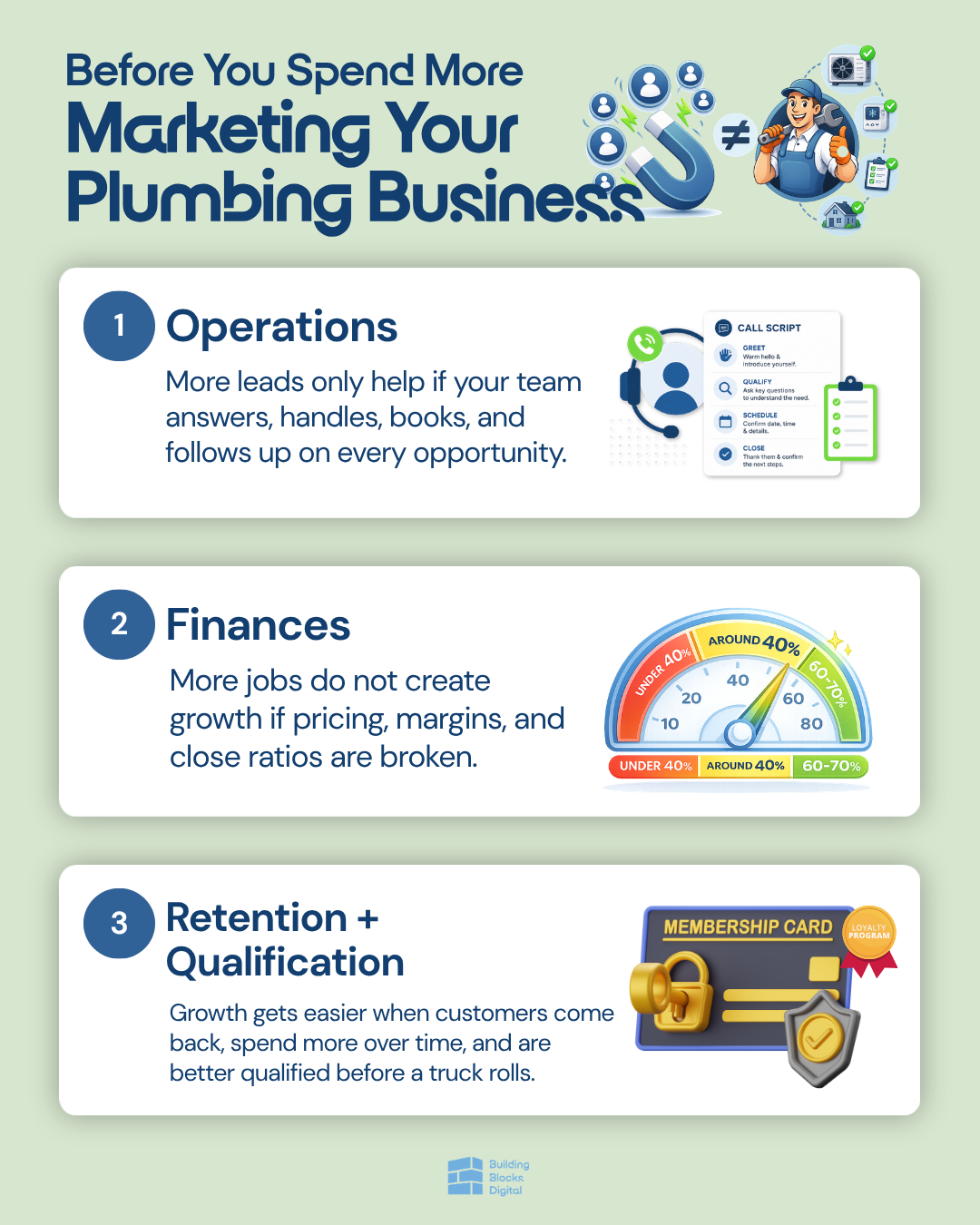
A 40% close rate is a healthy benchmark for many plumbing companies.
If you’re consistently closing 60% or 70% of replacement estimates, you’re probably undercharging. Some rejection is healthy because it usually means your pricing reflects the value of your experience, professional service, and expertise.

“If you’re not making your margin, your business is never going to grow from where it is right now.”
If your close rate falls below 40%, don’t immediately lower your prices. Instead, review your sales presentation, estimate process, and follow-up. Customers may not fully understand your value, or they may simply never hear from your business again after receiving an estimate.
Your close ratio is more than a sales metric. It helps identify weaknesses in your pricing, sales process, and follow-up system, while showing whether your lead generation efforts are producing high-quality leads that support long-term growth.
If you’re wondering how much to invest once these fundamentals are in place, read our guide, What’s a Good HVAC & Plumbing Marketing Budget Under $1 Million?
Area #3: Retention and Qualification Decides Customer Value
After improving your operations and finances, focus on retention and customer qualification. Winning a new customer is only the beginning. Long-term business growth comes from increasing the value of every paying customer your lead generation brings in.
Many plumbing businesses spend significant time and money generating new leads. A smarter strategy is to keep those customers coming back instead of paying to replace them.
Use Maintenance Plans to Keep Customers Coming Back
Many plumbing companies already offer maintenance plans, but not every business uses them to their full potential.
Routine services such as water heater flushing, inspections, and preventative maintenance keep your business in front of customers long after the first service call. Offering members a small discount on future repairs also gives them another reason to call you first instead of searching for another contractor.
Increase Customer Lifetime Value
Every paying customer represents a significant investment in lead generation, marketing, and time. Instead of treating every visit as a one-time plumbing job, look for opportunities to provide additional plumbing services over time.
During routine maintenance, technicians may identify aging fixtures, future replacement needs, or other repairs before they become emergencies. That helps customers plan ahead while increasing customer lifetime value without spending more to acquire new business.
Satisfied customers are also more likely to recommend your company to friends, neighbors, and local groups, creating more referrals and repeat business.
Add Dispatch Fees When the Work Is Abundant
Sometimes the problem isn’t generating more leads. It’s qualifying the right ones.
If your schedule is already full and you’re receiving a steady flow of estimate requests, a dispatch fee can help prioritize high-quality leads while reducing low-quality inquiries. Depending on your market, that fee may range from $20 to $80 and can help cover technician travel time and fuel costs.
Businesses that invest in insurance, bonding, employee background checks, and ongoing training often compete on professionalism rather than price. A dispatch fee helps align your business with customers who value those standards instead of simply looking for the cheapest estimate.
Why More Leads Don’t Always Mean More Growth for Plumbing
Every weak system creates a leak. Missed calls leak opportunities. Weak call handling leaks booked jobs. Delayed follow up leaks estimates. Outdated pricing leaks profit, while poor customer retention reduces customer lifetime value.
Sending technicians on too many free estimates can also waste valuable time when demand is already high. The solution isn’t simply generating more lead flow. It’s building systems that convert more of the opportunities you already have.
Whether your leads come from Google Business Profile, Google Ads, Google Local Services Ads, Local SEO, website traffic, social media, online reviews, or local business directories, every marketing campaign performs better when your operations, finances, and retention strategies work together.
Instead of focusing only on lead volume, track metrics like lead-to-booking rate, close ratio, and customer lifetime value. These numbers provide a clearer picture of your marketing ROI and help identify where your business can grow more profitably.
Fix the Plumbing Business Before You Chase More Leads
Before increasing your marketing spend, make sure your business is ready to convert more plumbing leads into profitable customers.
Start by answering every call, improving dispatcher training, and building a consistent follow-up system. Then review your pricing, protect your margins, and monitor close ratios to ensure every plumbing job supports healthy profit.
Finally, strengthen customer retention with maintenance plans, increase customer lifetime value, and consider dispatch fees when demand is already strong.
More leads only create business growth when your operations, finances, and customer retention systems support one another.
If you’d like help identifying the “leaky buckets” in your business, Building Blocks Digital can help. We’ll review your current marketing system, audit your sales and lead-handling processes, and identify opportunities to generate more revenue and profit from the marketing you’re already doing.
Schedule a discovery call today or call us at (505) 365-1545 to speak with our team. We’ll help you strengthen your marketing, improve your lead-handling systems, and build a more profitable plumbing business before you invest another dollar in marketing.
Frequently Asked Questions
Why do more plumbing leads not always create more growth for plumbing?
More plumbing leads do not automatically create business growth. If your plumbing business has missed calls, delayed follow-up, outdated pricing, or weak customer retention, additional lead generation efforts can increase workload without improving profit or marketing ROI.
What should a plumbing company fix before spending more on marketing and lead generation?
Before increasing your marketing spend, make sure your marketing system can consistently convert new leads into booked jobs. Review your call handling, follow-up system, pricing, customer retention, and sales process so your digital marketing and lead generation produce more profitable results.
What is a good close rate for plumbing estimates?
Many plumbing companies use a 40% close rate as a healthy benchmark. If your close rate is much higher, you may be underpricing your plumbing services. If it’s lower, review your sales presentation, follow-up, and overall conversion rate before changing your prices.
Should plumbing companies charge a dispatch fee?
It depends on your lead flow and workload. If your business already receives steady calls and plenty of high-quality leads, a dispatch fee can help qualify customers, reduce low-quality inquiries, cover technician travel costs, and improve overall profitability.
How can Building Blocks Digital help improve plumbing lead generation and marketing?
Building Blocks Digital helps plumbing business owners improve more than just lead generation. We review your marketing system, Google Business Profile, Local SEO, Google Local Services Ads, sales process, follow-up, pricing, and customer retention to help you generate more plumbing leads, increase marketing ROI, and turn more leads into loyal plumbing customers.