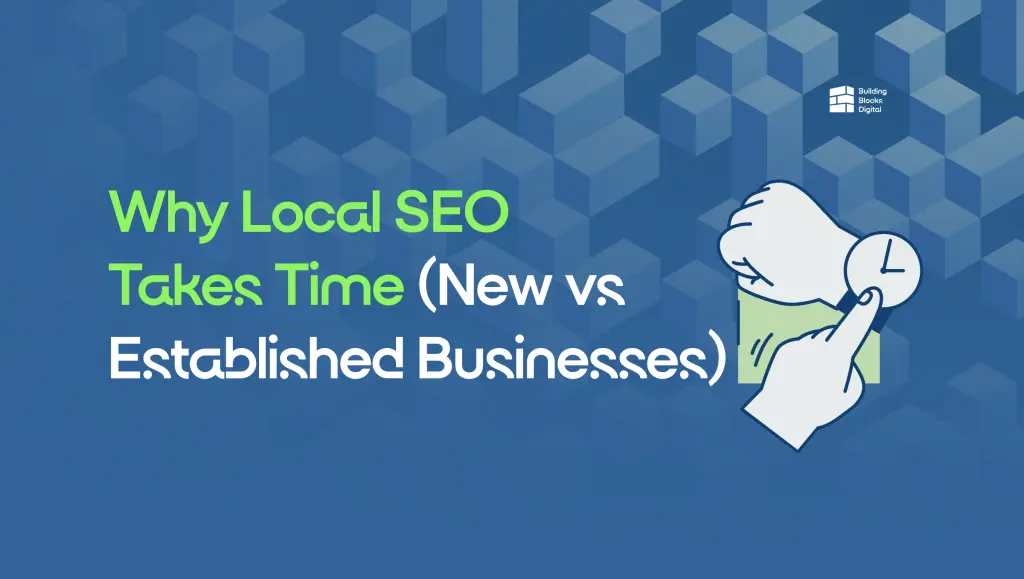
Why Local SEO Takes Time (New vs Established Businesses Explained)
You started investing in local SEO, but the results feel slow. You’re checking your rankings, watching competitors, and wondering if your SEO efforts are actually working.
That’s a fair question. And the honest answer depends on one thing most business owners overlook.
Not every business starts in the same place.
Local SEO is the slowest form of internet advertising, and it works more like a marathon than a sprint. Some local businesses are just getting started. Others have been building trust with search engines for years.
This guide breaks down why local SEO takes time, what impacts your SEO results, and what you should realistically expect based on where your business stands today.
Key Takeaways
- Local SEO takes time because search engines need trust signals before ranking you.
- New businesses start at zero with no domain history, reviews, or authority.
- Established businesses benefit from existing authority and past SEO efforts.
- Only limited spots exist in local search results and the local pack.
- New businesses typically need 6–12 months for meaningful growth.
- Established sites often see progress in 3–6 months.
- Early SEO progress includes impressions, rankings, and small traffic gains.
- Competition, keyword difficulty, and domain age all impact speed.
- If an established site shows no movement after 6 months, something may be wrong.
Why Local SEO Takes Time: The Marathon Metaphor Explained
Think of search engine optimization like running a marathon.
A marathon is 26.2 miles. But here’s the catch. Not everyone starts at mile zero.
Some businesses are just beginning. Others are already at mile 15 or even mile 20. That difference matters more than most business owners realize.
In local SEO, you’re competing for limited space. Only a handful of businesses show up in the local pack on Google Maps. Only ten make it to page one of organic search results.
That means you’re not just doing SEO. You’re competing against businesses that may already have stronger content quality, better site engagement metrics, and more local backlinks from reputable websites.
Time in the market creates an advantage. Businesses that have been consistent with SEO strategies build momentum.
That’s why SEO takes time. Unlike paid ads, where you can pay for instant visibility, local SEO is about sustainable growth and earning your position over time.
If you want a clearer, behind-the-scenes look at how it all comes together, check out this in-depth guide to how Google Search works.
Why New Local Businesses Struggle With SEO Early On
Starting From Zero Trust
New businesses face a simple problem. There’s no trust yet.
Search engines look at signals like domain age, domain history, and overall website quality. A brand-new site has none of that.
There are usually gaps in:
- Google Business Profile setup and optimization
- NAP consistency across local directories
- Reviews and reputation
- Content development and local visibility
On top of that, technical SEO factors, like mobile usability, site speed, and technical health, often need work.
Without these foundational elements, it’s hard to compete in local search results.
Google breaks down what truly strong, helpful content looks like in this guide to creating helpful content.
The Competitive Landscape Problem
Even if you do everything right, you’re still entering a competitive landscape.
Established competitors already rank for valuable target keywords. They’ve aligned their content with search intent and built authority over time.
To catch them quickly, you’d have to move at an unrealistic pace across multiple SEO strategies.
That’s not how SEO works.
Real growth comes from consistent effort and ongoing optimization.
You build momentum over time. Unlike paid ads, you can’t flip a switch and instantly win in local search.

Realistic Timeline for New Businesses
“Most newer businesses will take six to 12 months of SEO work to see meaningful results.”
That doesn’t mean nothing happens early on. You’ll start to see leading indicators like:
- Pages getting indexed
- Rankings for long tail keywords
- Small increases in organic traffic
You may also begin showing up in Google Search Console for more queries.
Several factors can speed things up:
- Lower keyword difficulty
- Less competition in your service area
- Strong technical SEO setup
- Proper Google Business Profile optimization
The key is understanding that early SEO progress is quiet. It builds before it becomes visible.
Why Established Businesses See Faster SEO Results
Existing Authority and Trust
Established businesses start in a completely different position.
They already have reviews on their Google Business Profile. They’ve built up local citations and earned backlinks. Their site has history, traffic, and user behavior data.
All of these signals tell search engines that the business is legitimate and trustworthy.
That trust translates into stronger local visibility and faster movement when changes are made.
Faster Response From Search Engines
When an established site makes improvements, search engines respond quickly.
Updates like on-page optimization, technical improvements, and new location pages are recognized and processed faster.
That means rankings in search results and Google Maps can shift in a matter of weeks, not months.
Tools like Google Search Console often show this SEO progress almost immediately after changes go live.
Realistic Timeline for Established Sites
For established businesses, meaningful growth typically happens within 3–6 months.
In many cases, you’ll see visible progress in the first 60–90 days.
Why?
Because you’re not starting from scratch. You’re closing gaps in the competitive landscape.
Publishing high-quality content, improving technical SEO, and refining strategy builds on existing authority.
That’s what makes the difference.

What Early SEO Progress Actually Looks Like
SEO success doesn’t show up overnight, and early progress can feel subtle even when things are working.
Those small wins, both visible and behind the scenes, are what build the foundation for consistent rankings, stronger traffic, and predictable lead flow over time.
Early progress often looks small, but it matters.
You might see:
- Increased impressions in search results
- Rankings for more local keywords
- Slight improvements in organic traffic
Behind the scenes, bigger things are happening:
- Stronger internal links
- Better alignment with user intent
- Improved site engagement metrics
- Technical SEO improvements
“SEO growth won’t feel significant at first, but it builds over time.”
These are the building blocks of long-term growth. Visible results follow once these foundations are in place.
Key Factors That Impact Local SEO Speed
Several key factors determine how fast you can rank locally.
These include:
- Competition level in your market
- Population size and demand
- Domain age and whether you’re working with new domains or an established site
- Strength of your Google Business Profile optimization
- Quality of content, local backlinks, and local citations
- Technical elements like site speed, mobile usability, and overall technical health
- Consistency of your SEO services and ongoing optimization
Every market moves at a different speed. That’s why timelines vary so much between businesses.
When Slow SEO Results Signal a Problem
Slow SEO isn’t always a problem. But sometimes it is.
For established businesses, a lack of movement after six months is a red flag.
It could point to weak SEO strategies, poor content development, missing on-page optimization, and a lack of consistent execution.
If your business already has existing authority, you should start seeing traction. If not, it may be time to reassess your approach. Here’s a helpful breakdown on common issues: 5 Biggest Local SEO Mistakes Home Service Businesses Make.
Set Realistic Expectations for Long-Term Local SEO Growth
Local SEO is a long-term digital marketing investment.
If you’re a new business, your focus should be on consistent effort and building a strong foundation.
If you’re established, you should expect responsiveness and measurable gains. Either way, the goal is the same: predictable lead flow and sustainable growth, and your starting point will determine your timeline.
To get clarity on where you stand and what to do next, start with a professional website & SEO audit service from Digital Harvest. You can also call us directly at (505) 365-1545, book a discovery call with our team, or fill out the contact form on our website to get a clear, actionable plan for predictable growth.
Frequently Asked Questions
Why does local SEO take time?
Local SEO takes time because search engines need to build trust through signals like content quality, reviews, and user behavior before improving your rankings in local search results.
How long does local SEO take for a new business?
For most new local businesses, local SEO takes time, with meaningful growth typically happening within 6–12 months as your domain age, content, and authority improve.
How long does local SEO take for an established business?
Local SEO for an established business usually moves faster, with noticeable SEO results in 3–6 months thanks to existing authority and prior search engine optimization signals.
Can local SEO work faster in less competitive markets?
Yes, local SEO can move faster in areas with lower keyword difficulty and fewer competitors, making it easier to rank for local keywords and gain visibility.
What are the early signs that local SEO is working?
Early signs that local SEO is working include increased impressions, better rankings for long tail keywords, and gradual growth in organic traffic and engagement.
How do I get started with Digital Harvest for local SEO?
If you’re ready to improve your local SEO results, you can book a discovery call with Digital Harvest, the Google guys, to review your current strategy and map out your next steps toward predictable growth.